
Indonesia U-20 National Team did not merely qualify for the final round of the 2027 AFC U-20 Asian Cup. The 2-0 victory over Australia demonstrates that Garuda Muda has begun developing the capability to play effectively in high-stakes decisive matches.
This result also paints a clear picture of how Nova Arianto successfully built and prepared the team despite constraints and limited player availability. Throughout his tenure with national junior squads, Nova is consistently recognised for extracting maximum performance from every team he assembles.
Even so, this success also leaves PSSI with critical unfinished priorities. Youth national team coaches should never face barriers accessing the country's best players purely due to competition calendar conflicts.
READ ALSO
Ratu Tisha wants the Indonesian National Team to have a steel mentality, and no longer be branded as mentally weak.
Indonesia U-17 Loses Again to China, Improved Performance Not Enough to Win
After undergoing knee surgery in Spain, Marselino Ferdinan is determined to return even stronger.
The Elite Pro Academy (EPA) competition schedule must be aligned with youth national team agendas, so that player development runs in parallel and supports the national team's long term requirements.
Players that progress through this structured youth competition system will eventually form the regeneration pool for the senior national team. The highest potential talents can be identified and monitored early for gradual integration into the senior squad environment.
This clear pathway is essential to build healthy intergenerational continuity, while also providing tangible motivation for young developing players.
This analysis of Garuda Muda's performance was one of the core discussion topics on the ITSMe Podcast, recorded at Sentul Studio, Bogor on Monday 7 September 2026, hosted by Raisha and Gilang Respaty.
Football observers Yusuf Kurniawan (known locally as Bung Yuke) and Erwin Fitriansyah reviewed and broke down Indonesia's performance following their official qualification to the final tournament.
Effective When It Matters Most
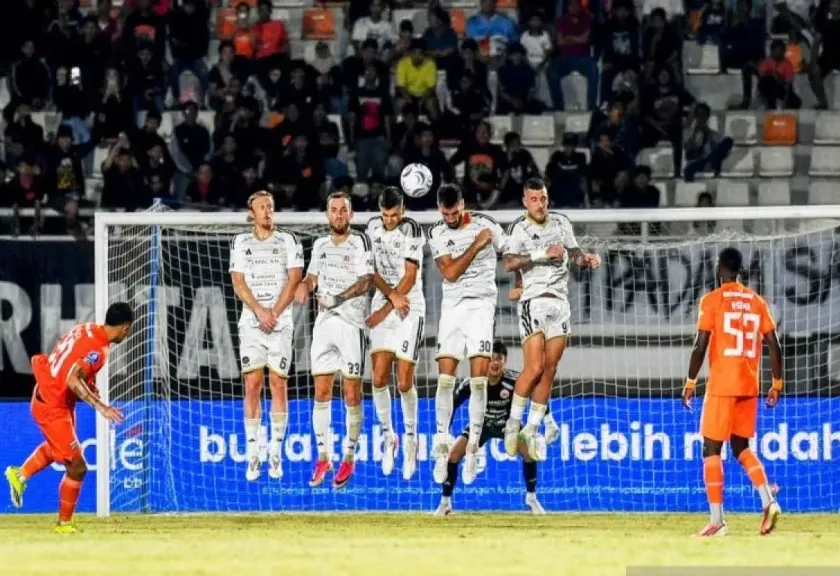
The victory over Australia showcased Garuda Muda's ability to capitalise on match momentum while maintaining their tactical structure under sustained pressure.
Indonesia did not exercise total dominance over the match, but they executed with far greater efficiency during all critical game moments.
Theodore Evan Leeming's 28th minute goal handed Indonesia the advantage, which they successfully protected through disciplined, well-organised defending.
Australia escalated their attacking pressure during the second half, but were repeatedly unable to create space inside dangerous final third areas.
As Australia pushed forward ever more aggressively searching for an equaliser, gaps opened up behind their defensive line. Amar Rayhan Brkic exploited this space perfectly to score Indonesia's second goal in the 90+2nd minute.
This match pattern confirmed that Garuda Muda do not rely only on individual player quality. The squad showed they can hold defensive shape, correctly read match flow, and convert defensive transition moments into concrete scoring opportunities.
A return of 7 points from 3 matches, 5 goals scored and zero goals conceded reinforces this assessment. While Indonesia are not yet a flawless side, they have demonstrated the two most critical qualities for tournament football: clinical efficiency when chances arrive, and unbroken discipline when required to defend.
Qualification Secured, Work Is Far From Complete
This victory saw Indonesia finish as winners of Group H and seal automatic qualification for the final tournament hosted in China. This marks Indonesia's third consecutive appearance at the AFC U-20 Asian Cup finals.
However, this success achieved in the Laos qualifying group must not end as an isolated one-generation achievement. The EPA competition must become a fully integrated component of the national team ecosystem. Domestic youth competition schedules and national team programme calendars must be planned to avoid conflicting with one another.
Nova has proven he can construct competitive squads from the limited players made available to him. But a properly functioning player development system must guarantee national team coaches full access to select every available elite talent. This is the only foundation for consistent, sustainable squad regeneration.
Ultimately, success at U-20 level is never only about qualifying for a single tournament. The actual goal is preparing a generation of players that can become the backbone of the senior national team, and secure long term continuity for Indonesian football.